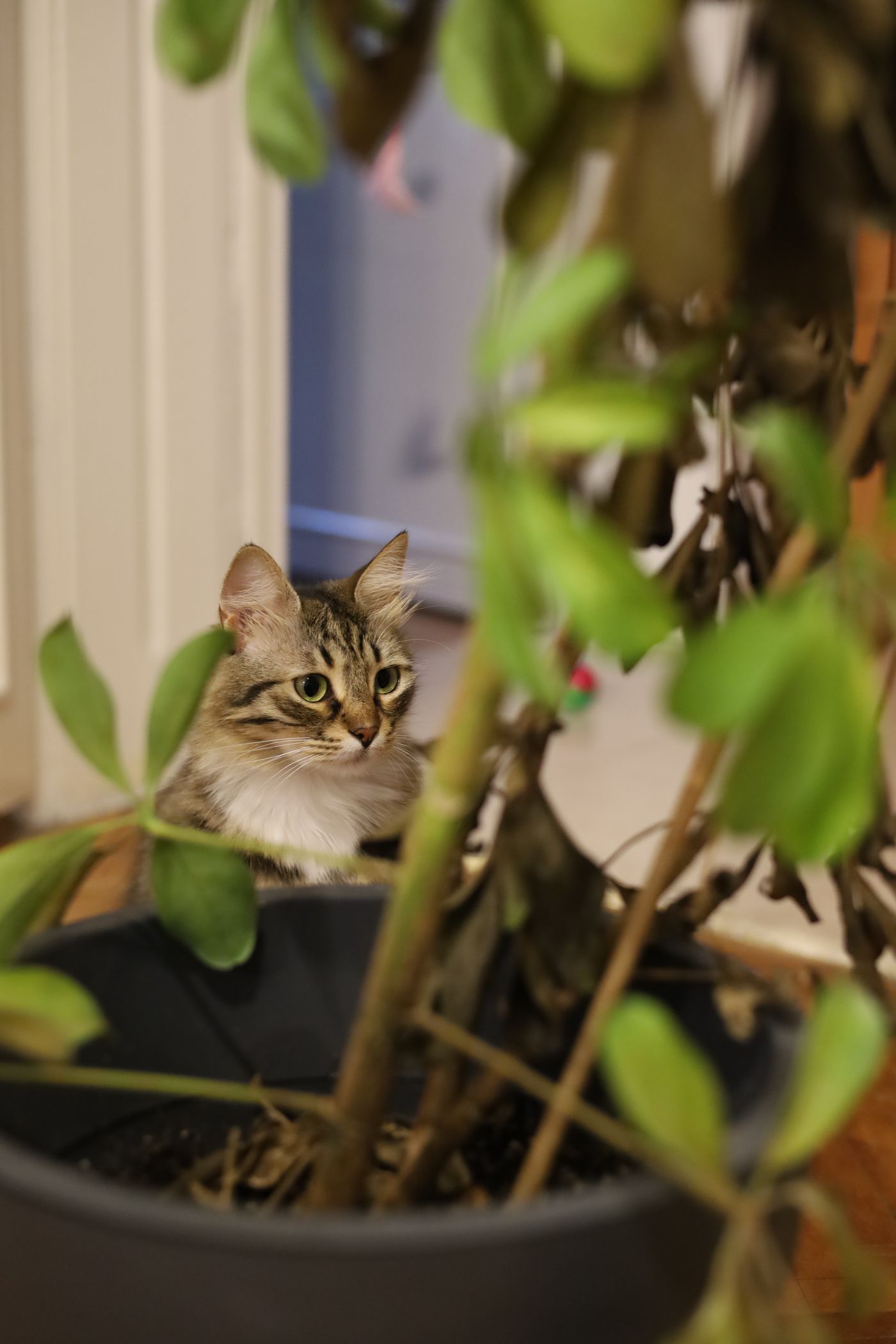
An accurate plant identity is more useful than a reassuring appearance or a common name. Several species can share similar names while having different safety implications. Check the plant itself before deciding whether the arrangement suits a home with curious pets.
Check before bringing it home
Use a reputable veterinary or animal poison resource to assess the plant for the species you keep. Keep the label or a clear photograph. If the identity is uncertain, do not assume that an attractive display or a 'natural' label means it is safe.
True lilies and daylilies are especially dangerous to cats. Exposure can involve plant material, pollen or vase water, so keeping the flowers on a high shelf is not a dependable precaution.
Consider the whole arrangement
Fertilizers, pesticides, decorative stones, ribbons and unstable pots introduce separate risks. A plant described as non-toxic can still cause digestive upset if eaten, and soil or small accessories may be swallowed.
Create safer alternatives
Choose verified suitable plants, position them securely and provide appropriate enrichment so plants are not the only interesting objects available. Supervise new arrangements and remove anything your pet persistently chews.
Act on possible exposure
If your pet may have eaten or contacted a dangerous plant, contact a veterinarian or animal poison service promptly. Save a sample or photograph and describe the timing. Do not wait for symptoms or induce vomiting unless specifically instructed.
A short identification check before purchase is easier than trying to determine the contents of a bouquet during an emergency.
ONE THING TO TAKE WITH YOU
Identify plants accurately and treat suspected toxic exposure as a reason for prompt professional advice.
FURTHER READING
Editorially checked on 23 November 2026. Sources are provided for further reading; this is not an individual veterinary assessment.
General editorial information. Your veterinary team can advise on the needs and health of your individual pet.