Brief paw cleaning is different from persistent or intense licking. A single affected paw, irritation, pain, skin conditions and behavioural factors can each change the picture. Record the pattern and seek appropriate assessment rather than deciding the cause from appearance alone.
Look without digging
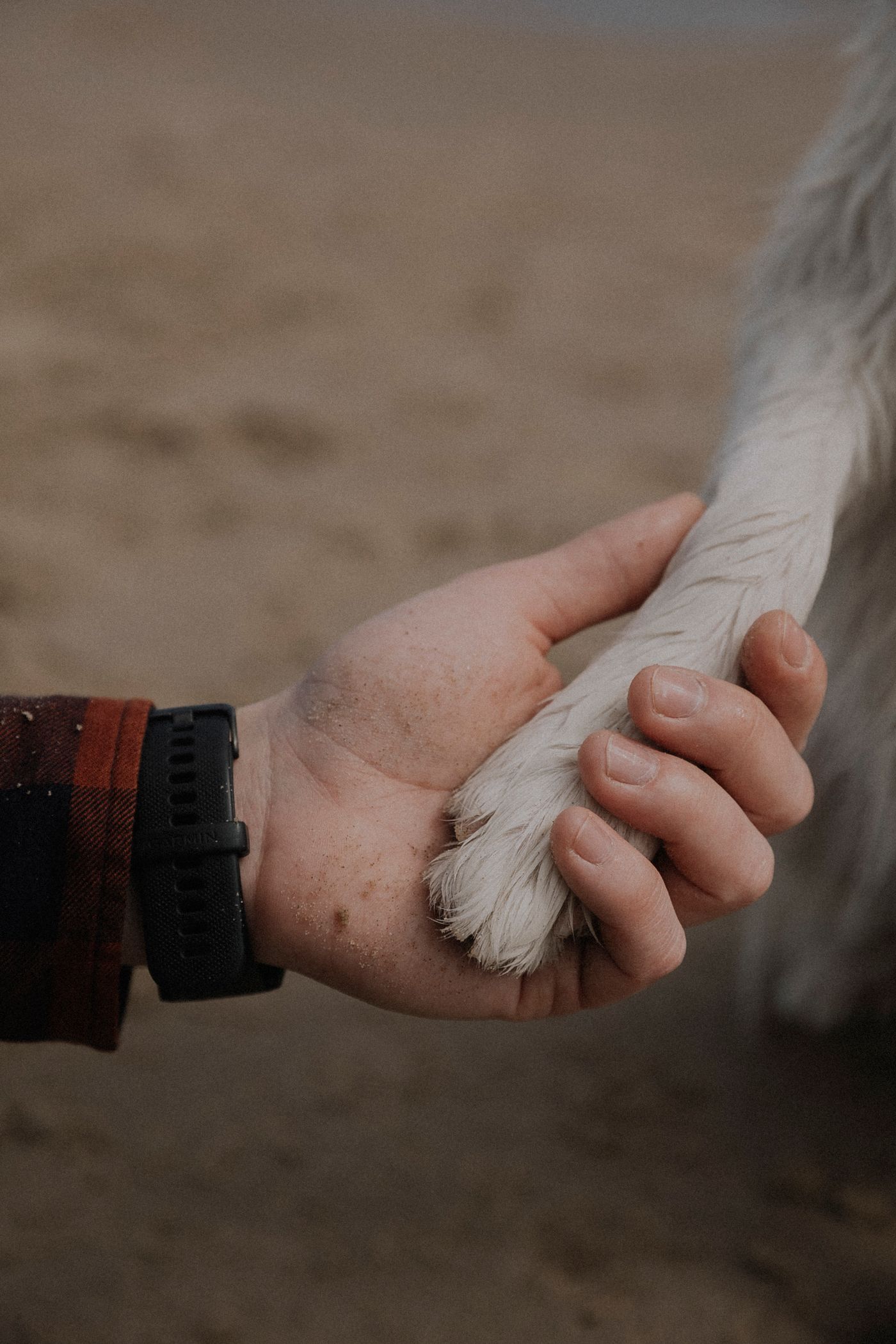
When your dog is comfortable, check pads, nails and the spaces between toes. Note redness, swelling, odor, discharge, broken nails or a visible object. Do not probe a puncture, cut into the skin or pull at something deeply embedded. Painful paws can make even a gentle dog react defensively.
Keep routine care simple
After muddy or gritty outings, rinse or wipe away debris as appropriate and dry carefully between the toes. Avoid repeated harsh scrubbing, alcohol, strong disinfectants or human creams that the dog may lick off. Check whether a new surface, cleaning product or poorly fitted boot coincides with the problem.
Interrupt the cycle with help
Persistent licking can keep the skin moist and worsen injury. Your veterinarian may recommend protection while the cause is investigated. A cover must fit safely and should not trap moisture; improvised tight bandages can create additional harm.
Know when to call
Arrange assessment for ongoing licking, limping, bleeding, swelling, odor or a sore that is not healing. Sudden severe pain or an inability to bear weight needs prompt attention.
Record whether one paw or several are affected and when the licking occurs. Those details are more useful than assuming the dog is simply being unusually clean.
ONE THING TO TAKE WITH YOU
Persistent paw licking is a symptom to investigate, not a grooming habit to ignore.
FURTHER READING
Editorially checked on 23 November 2026. Sources are provided for further reading; this is not an individual veterinary assessment.