A brush may be unwelcome because it catches fur, irritates skin or arrives before a cat is comfortable with the contact. Resistance gives you a reason to change the experience. Choose gentler, smaller steps instead of trying to hold your cat still for a longer session.
Check comfort first
A sudden dislike of grooming may reflect sore skin, mats or pain when the body is moved. Arrange a veterinary check for new sensitivity, bald patches, wounds or a marked change in behavior. Do not assume every refusal is a personality trait.
Match the tool to the coat
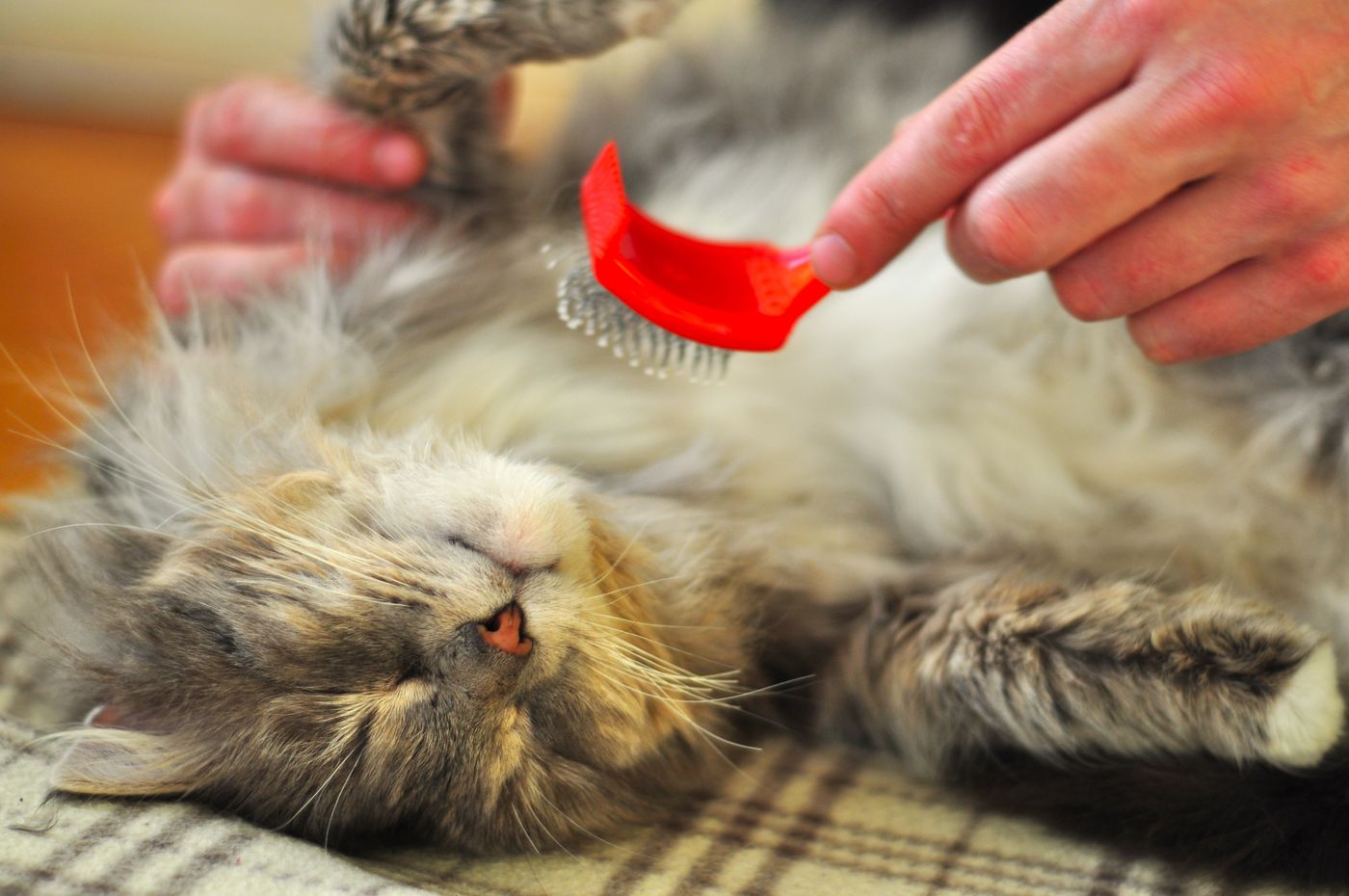
A soft brush may help introduce handling, while some coats also need a suitable comb to reach tangles. Metal tools are not automatically wrong; tooth spacing, smoothness, technique and the individual coat matter. Ask a groomer or veterinary team to demonstrate if unsure.
Begin where touch is welcome
Offer the brush to inspect, reward calm interest and try one gentle stroke along an accepted area. Follow the coat's direction and avoid pulling. Keep early sessions very short, then gradually work through small sections over several days.
Do not chase the cat with the brush or groom immediately after an exciting game. A stable surface and a quiet moment make participation easier.
Treat mats carefully
Tight mats can pull painfully on delicate skin. Do not cut them out with scissors close to the body or repeatedly tug at them. Professional removal may be safer.
End while your cat is still comfortable. A few good strokes repeated regularly can achieve more than an occasional exhausting battle.
ONE THING TO TAKE WITH YOU
Make grooming brief and comfortable, and investigate new sensitivity before pushing ahead.
FURTHER READING
Editorially checked on 23 November 2026. Sources are provided for further reading; this is not an individual veterinary assessment.