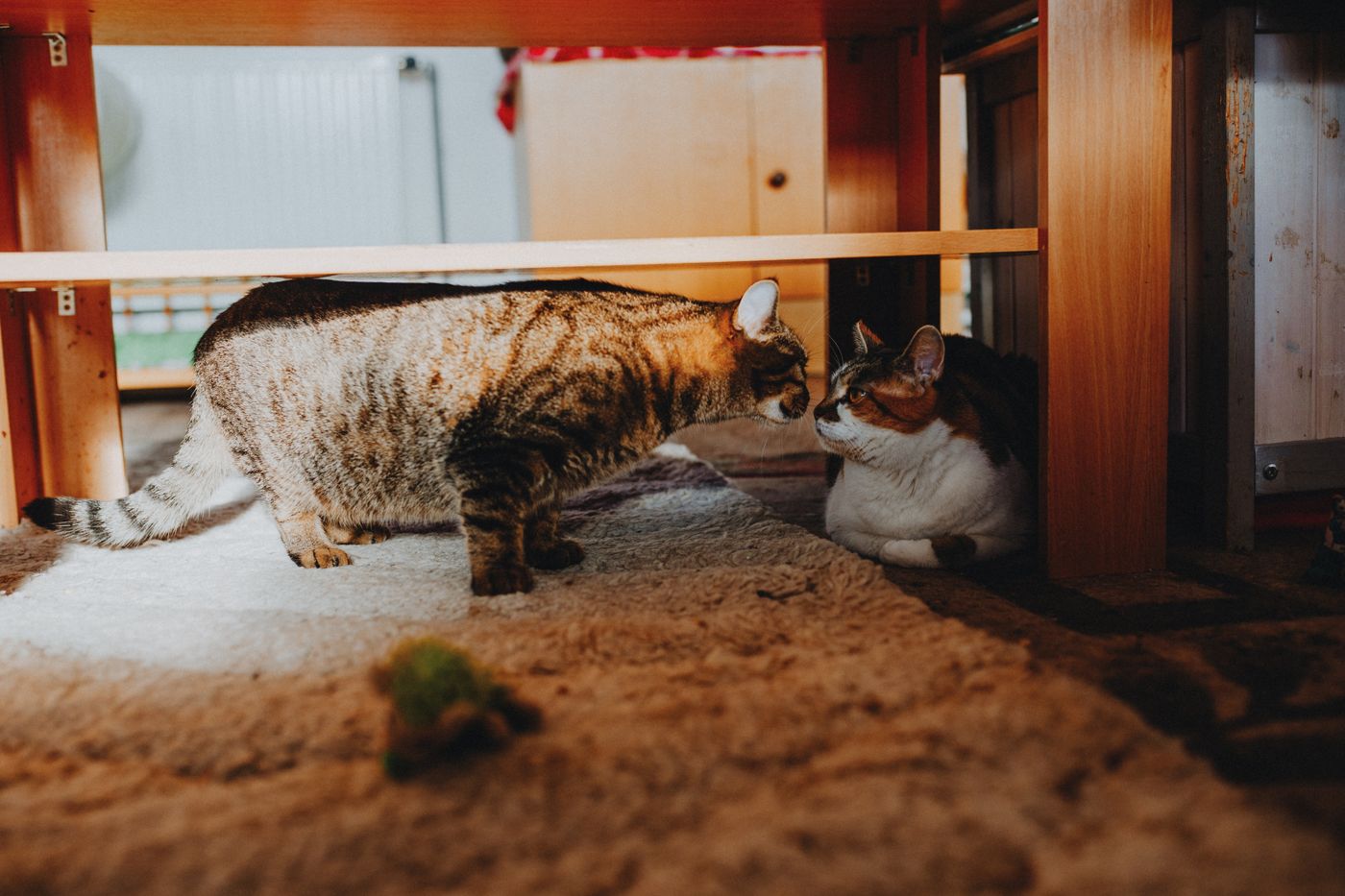
A second cat changes how the home is shared, and close friendship is not the only successful outcome. Some cats become companions while others prefer peaceful distance. Introduce resources, scents and access gradually so both cats have choice without a fixed timetable.
Begin with separate spaces
Prepare a comfortable room for the newcomer with its own food, water, litter, hiding place and scratching surface. Keep the resident cat's familiar resources available. Arrange appropriate veterinary care and discuss health precautions before direct contact.
Introduce scent before proximity
Exchange bedding or allow each cat to explore the other's area separately when both are comfortable. Pair awareness of the other cat with pleasant activities at a distance. Do not force a cat to investigate a scented object.
Build controlled visual contact
Use a secure barrier only when the cats can remain relaxed nearby. Keep sessions short and provide escape routes. Increase distance or return to an earlier stage if there is prolonged staring, stalking, blocking or distress.
Share space gradually
Supervise early meetings and offer multiple routes through the room. Distribute resources rather than clustering everything together. Continue separate rest and feeding options even after meetings go well.
Avoid letting the cats 'fight it out.' Do not reach between fighting cats with bare hands; separate safely and seek advice if conflict persists.
Progress may take weeks or longer. Quiet coexistence is a worthwhile outcome, and repeated tension calls for a slower plan with veterinary or qualified behavioral support.
ONE THING TO TAKE WITH YOU
Use separate resources and gradual exposure, with each cat's comfort setting the pace.
FURTHER READING
Editorially checked on 23 November 2026. Sources are provided for further reading; this is not an individual veterinary assessment.