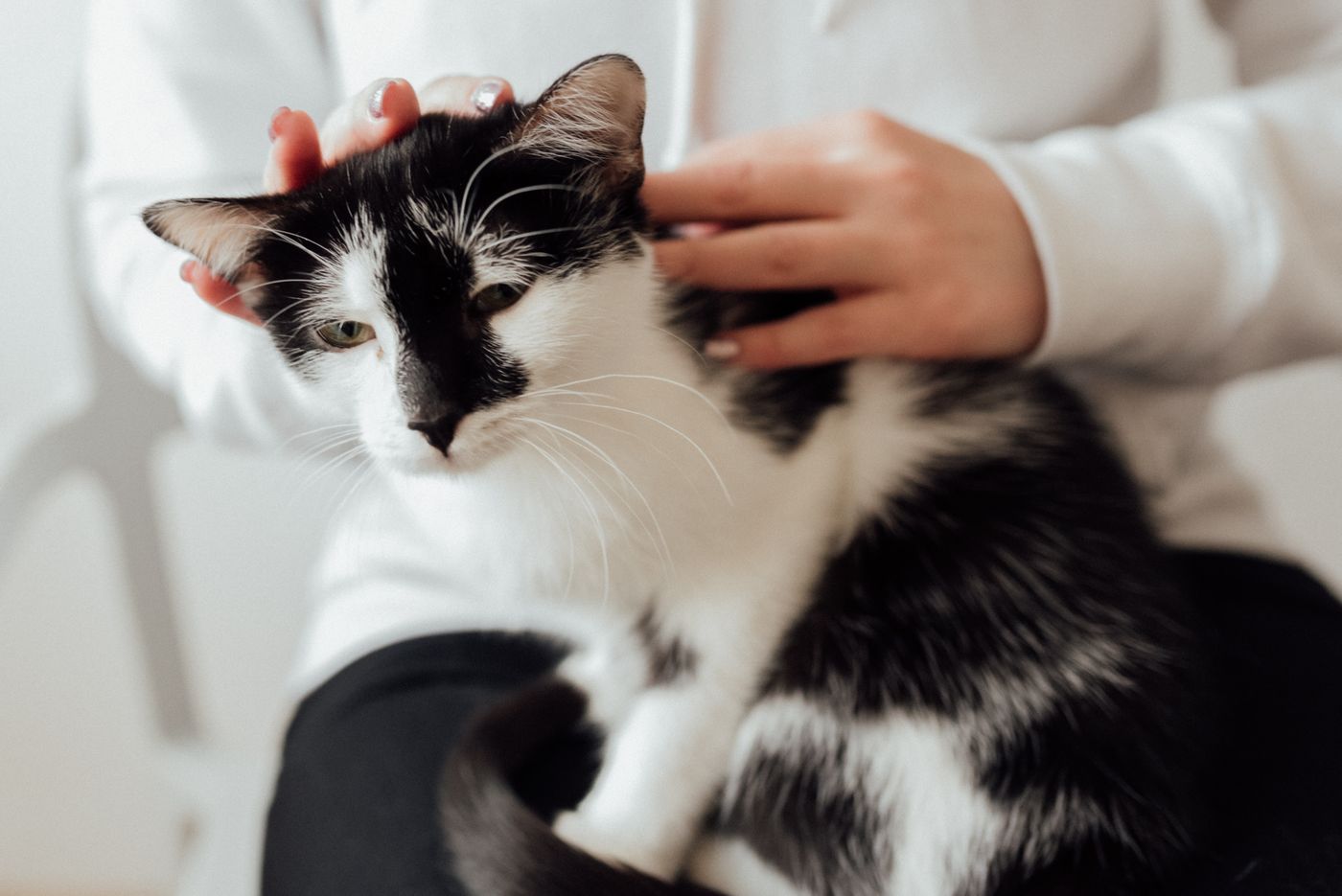
Compatibility between a dog and a cat depends on the individuals, including their history, confidence and chasing behaviour. Begin with safety arrangements before allowing direct contact. A workable introduction offers the cat routes to retreat and keeps early meetings carefully managed.
Protect the cat's space
Give the cat a dog-free room and secure elevated resting places. Food, water and litter should remain accessible without passing the dog. Let both animals become familiar with household sounds and scent while separated.
Reward calm awareness
Begin with controlled viewing through a secure barrier at a comfortable distance. Reward the dog for noticing the cat and then disengaging. Keep the dog on suitable equipment when needed, without creating leash tension or forcing a close approach.
A cat should never be held in place for the dog to inspect. It needs the option to hide or move away.
Watch for fixation
Stiff staring, stalking, chasing attempts or an inability to respond to the handler are reasons to increase separation and seek help. A wagging tail alone does not establish safety.
Expand access cautiously
Use short supervised sessions only when both animals remain comfortable. Preserve barriers whenever you cannot supervise, and avoid assuming that one calm meeting proves they are safe alone together.
Some combinations need professional assessment, and some may not be compatible. A peaceful home depends on managing the animals you have, not on expecting every dog and cat to become friends.
ONE THING TO TAKE WITH YOU
Keep the cat's escape routes open and reward the dog's ability to disengage, with safety managed throughout.
FURTHER READING
Editorially checked on 23 November 2026. Sources are provided for further reading; this is not an individual veterinary assessment.