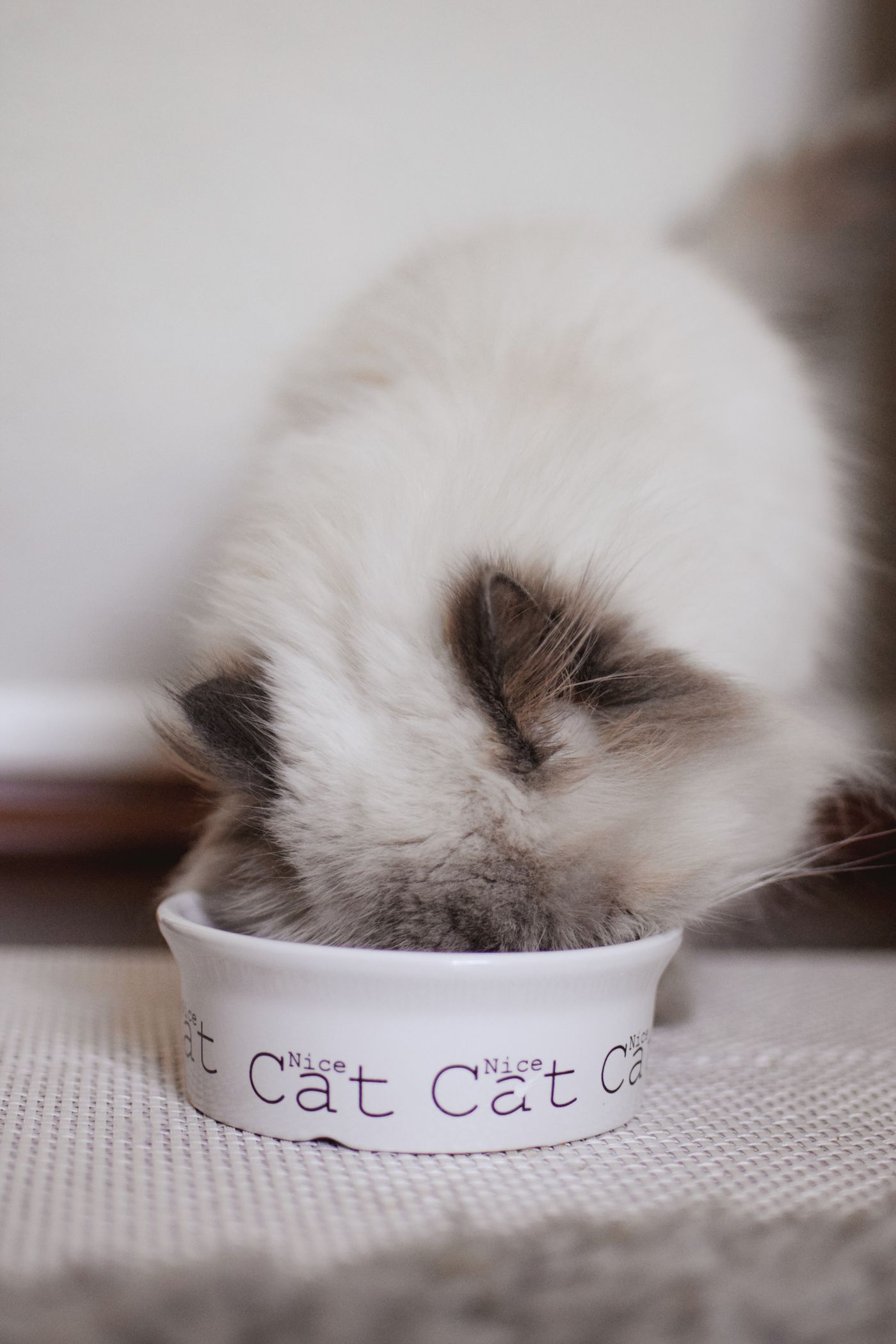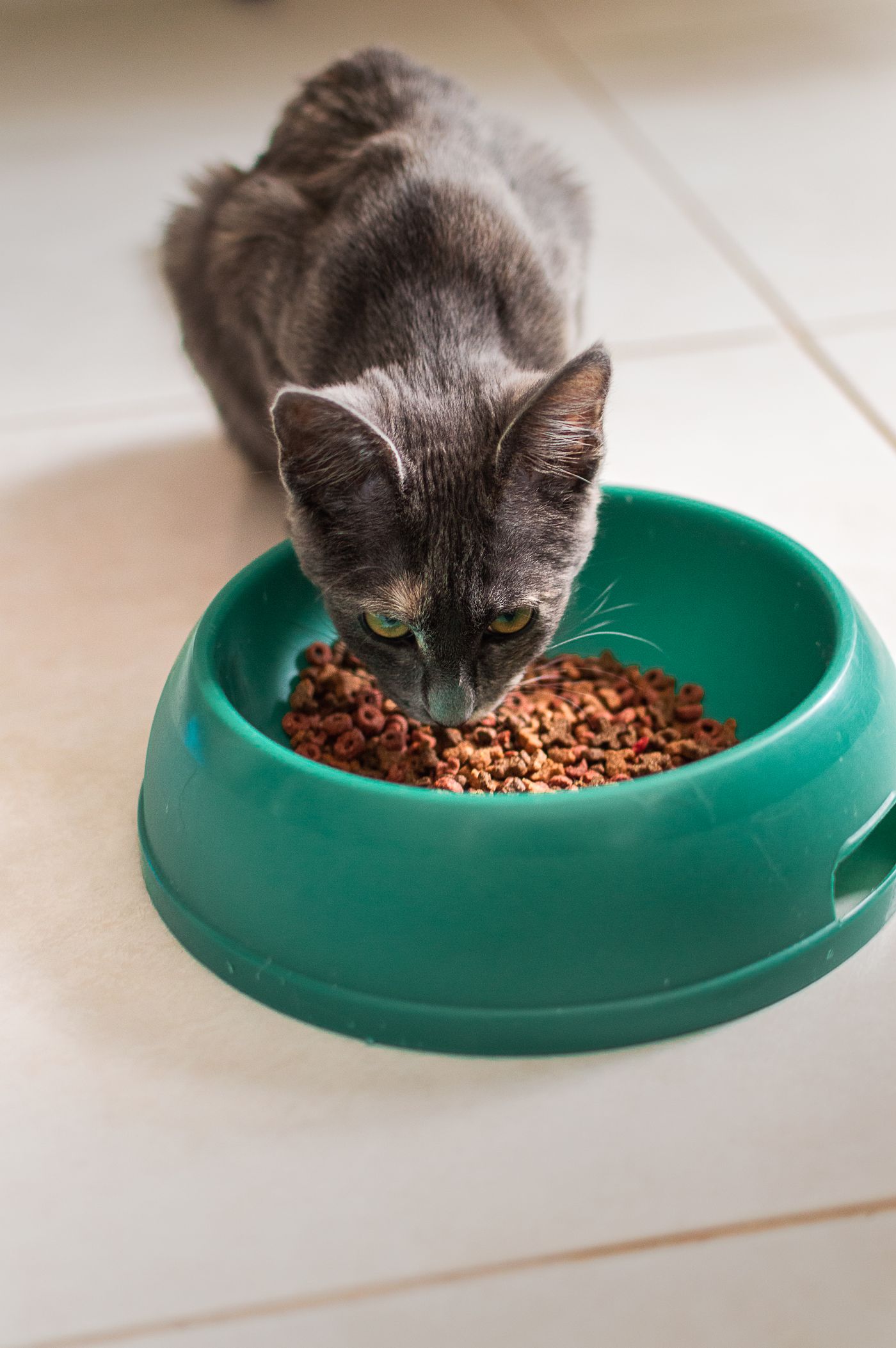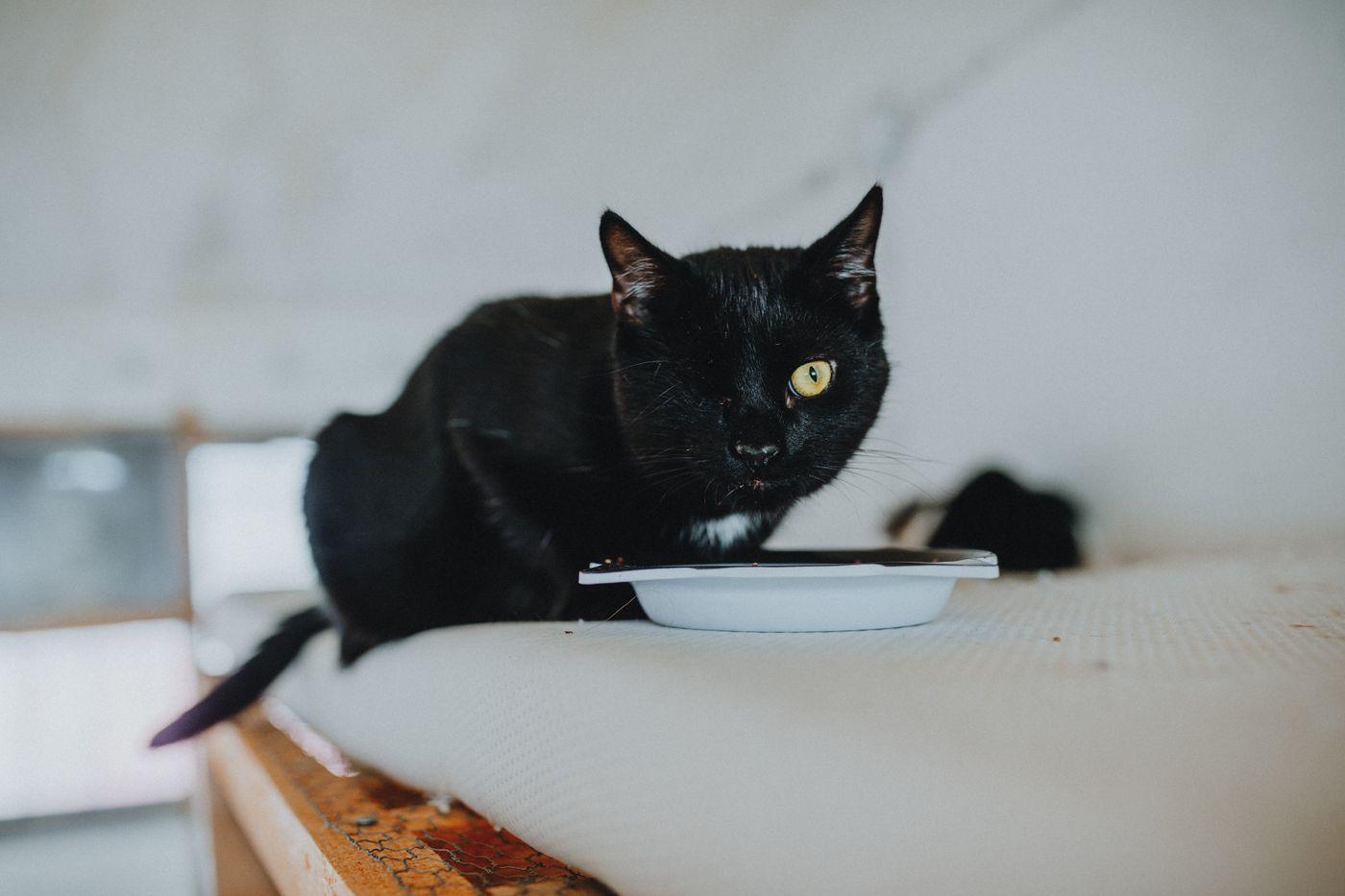
In a multi-pet household, an empty bowl does not show how much each animal ate. Confident or fast eaters can take extra while a hesitant companion misses out. Individual spaces and measured portions make both feeding and observation clearer.
Separate the meals
Use different rooms, barriers or enough distance that each pet can eat without pressure. Keep special diets and medication-containing food inaccessible to other animals. Cats may need feeding places that dogs cannot reach, but the location must still suit the cat's mobility.
Measure for each individual
Label portions and record which animal receives them. Include treats from everyone in the household. Do not assume that pets of similar size need the same ration or that a shared bowl will be divided fairly.
Watch the quiet competition
Staring, blocking a doorway or hovering near another bowl can change feeding behavior even without growling. A pet that gulps, carries food away or waits until others leave may need a more secure arrangement.
Use equipment for a specific purpose
A microchip-controlled feeder may help some households, but it needs acclimation and regular checks. Confirm that the intended pet can use it and that another animal cannot interfere. Technology does not replace observing intake.
Review the routine as needs change
Illness, a new animal or reduced mobility may require a new setup. Keep water and resting areas distributed as well.
The goal is not just orderly bowls. It is a reliable opportunity for every animal to eat its own food comfortably, with changes in appetite visible early.
ONE THING TO TAKE WITH YOU
Feed separately, measure individually and look for subtle blocking as well as obvious conflict.
FURTHER READING
Editorially checked on 23 November 2026. Sources are provided for further reading; this is not an individual veterinary assessment.
General editorial information. Your veterinary team can advise on the needs and health of your individual pet.