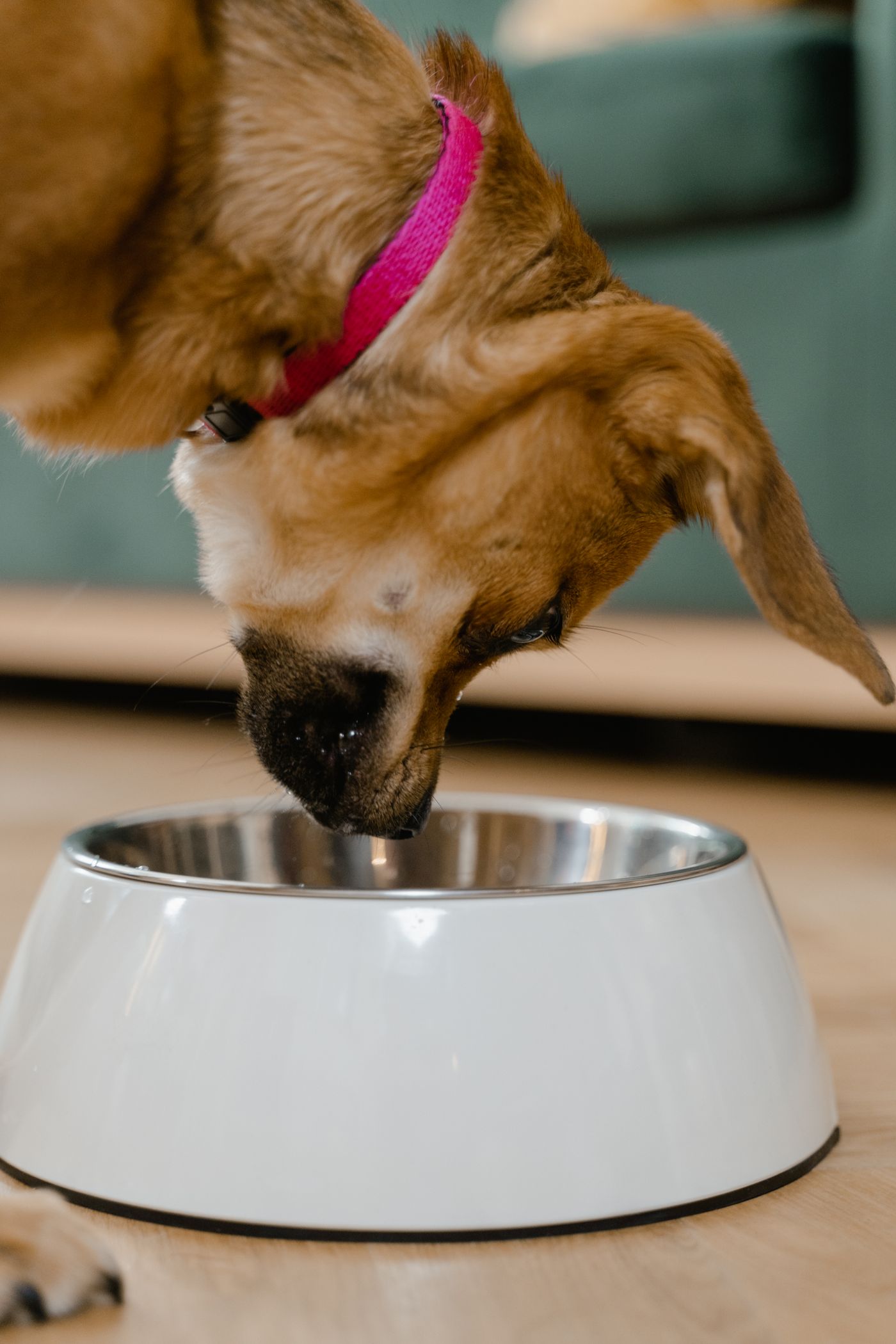
Finishing a meal quickly does not automatically mean a dog has been underfed. Competition, habit and broader changes in appetite can all influence eating speed. Consider the surroundings and recent history before choosing ways to make mealtimes less rushed.
Make meals feel secure
Feed household animals separately, with enough distance or a closed door to prevent pressure. Avoid reaching into the bowl or repeatedly taking it away. These interruptions can make food feel less secure and encourage rushing.
Keep portions appropriate and serve meals on a predictable schedule suited to your dog's age and health. Measure rather than estimating from how eagerly the dog eats.
Add gentle difficulty
Try a suitable slow feeder or divide the allowance into several smaller servings. Begin with an easy design that the dog can use without frustration. Check that edges are smooth, the size suits the muzzle and the dog cannot chew off pieces.
Supervised scatter feeding or a simple puzzle can also help in a clean, safe area. Count every portion toward the daily total and avoid puzzles that require excessive effort from an unwell dog.
Notice more than speed
A sudden increase in hunger, weight loss, vomiting or repeated regurgitation needs veterinary advice. Eating speed alone does not explain these changes.
An enlarged abdomen, unsuccessful retching, restlessness or collapse can be an emergency and should not be managed by changing bowls.
The aim is a relaxed, workable meal routine. A dog that takes a little longer and stays comfortable is making useful progress, even if it never becomes a leisurely diner.
ONE THING TO TAKE WITH YOU
Reduce competition, measure the ration and introduce an easy slow-feeding option.
FURTHER READING
Editorially checked on 23 November 2026. Sources are provided for further reading; this is not an individual veterinary assessment.
General editorial information. Your veterinary team can advise on the needs and health of your individual pet.